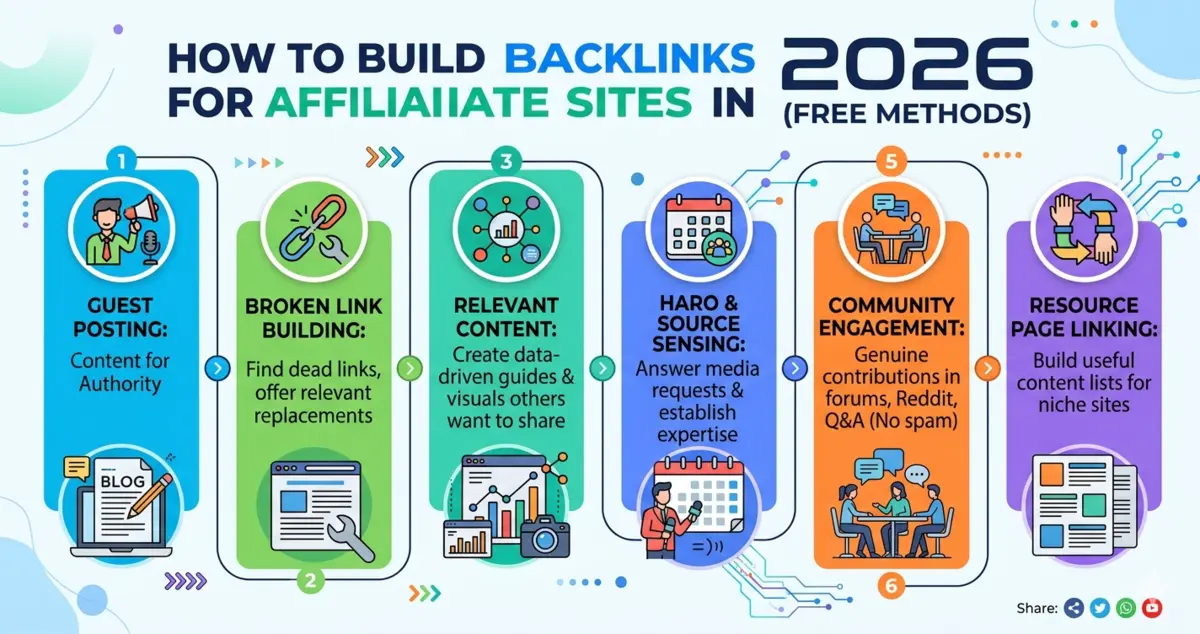
Here is an uncomfortable truth about affiliate marketing that most beginner guides skip: you can write the best article on the internet and still rank on page 4 if a competitor with average content has more authoritative backlinks pointing to their page. – Backlinks for Affiliate Marketing
The number one result on Google has 3.8 times more backlinks than positions two through ten, according to Backlinko’s study of 11.8 million search results — still the largest public dataset on ranking factors ever published. That is not a coincidence. Backlinks remain one of the three most significant ranking factors in Google’s algorithm in 2026, alongside content quality and user engagement.
According to analysis from rankomedia, 85% of SEO professionals believe backlinks have a significant impact on brand authority and search presence. And yet, 94% of all published content earns zero external backlinks — meaning only 6% of pages earn even a single inbound link.
That gap is your opportunity. Most affiliate sites publish and hope. This guide gives you a system to actively earn backlinks — for free, without buying links, without spamming, and without waiting years for someone to notice you.
Everything in this guide works specifically for affiliate sites in the make-money-online, digital tools, and online education niches. The strategies are ordered from lowest-effort to highest-impact so you can execute immediately regardless of where your site is today. Backlinks are one piece of the puzzle — for the full picture on zero-cost traffic, see our breakdown of free traffic strategies for affiliate marketers.
Already covered your SEO foundations? This article is part of the Silo 4 series. Start with the pillar: SEO for Affiliate Marketing: The Complete 2026 Guide
Why Backlinks Matter More – Backlinks for Affiliate Marketing Than Other Niches
Affiliate sites face a structural challenge that most content sites don’t. The keywords that earn commissions — “best ClickBank products”, “RankMath vs Yoast”, “top email marketing tools” — are commercially valuable. That commercial value attracts competition from high-authority domains with years of backlink accumulation.
Your money pages — product reviews and “best X for Y” lists — are the most competitive pages in your niche. Everyone wants to rank for them because they make money. To beat the competition, you need relevant backlinks. The direct link between the number of quality backlinks a page has and how much commission it earns is well-established: more quality links → higher rankings → more visitors → more affiliate clicks → more revenue.
For low-competition keywords with a keyword difficulty score under 15, a site with just 5–15 referring domains can rank page one with strong on-page SEO and good content depth. For mid-competition keywords with KD 20–35, you typically need 20–50 referring domains and a domain rating of 25–35 to compete consistently.
This is important context for new affiliate sites: you do not need hundreds of backlinks before you can rank. You need the right backlinks — from relevant, authoritative sites — and you need to be targeting keywords where the backlink bar is actually beatable.
The long-tail keyword table in this guide shows you exactly which keywords in your niche can be targeted with minimal backlinks, so your link building and keyword strategy work together from day one.
The Golden Rule: Earn Links, Don’t Buy Backlinks for Affiliate Marketing
Before diving into tactics, this needs to be said clearly.
Paid links violate Google’s guidelines and carry a meaningful risk of manual penalty, particularly for affiliate sites that Google scrutinises closely for thin or commercially manipulative content. The risk-to-reward ratio is unfavourable: a manual penalty can remove the site from search results entirely, wiping out the revenue stream the link was meant to build.
Every tactic in this guide is white-hat — meaning it earns links through genuine value, real relationships, and quality content. These methods take more effort than buying links. They also don’t risk destroying everything you’ve built.
🎯 Low-Competition Long-Tail Keywords to Target With Minimal Backlinks
One of the most powerful backlink strategies is also the most overlooked: target keywords where competitors have almost no backlinks, publish content that’s clearly better, and rank without needing an aggressive outreach campaign.
Long-tail keywords make up 91.8% of all Google searches. In 2026, targeting them is the fastest path to organic rankings because short-tail terms are dominated by high-authority domains. According to analysis of 50,000 keywords, pages targeting keywords with difficulty scores below 30 are 3.5x more likely to rank in the top 10 within 6 months compared to keywords with scores above 50.
Low competition keywords are phrases with a keyword difficulty score between 0 and 30, where the pages currently ranking belong to small blogs, forums, Quora answers, or low-authority sites. A well-structured article targeting that exact phrase can outrank those forum threads quickly, even on a site with minimal domain authority and no backlinks. Kit
Here is a researched table of low-competition long-tail keywords directly relevant to The Review Labs’ niche — all winnable with strong on-page SEO and 5–20 backlinks or fewer:
🗂️ Low-Competition Long-Tail Keyword Table — Affiliate Marketing Niche
| Keyword | Est. Volume | KD | Intent | Article Type | Affiliate Angle |
|---|---|---|---|---|---|
how to start affiliate marketing with no money | 1,600/mo | 14 | Informational | How-To Guide | ClickBank, JVZoo free products |
clickbank for beginners step by step | 1,300/mo | 16 | Informational | Step-by-Step Guide | ClickBank sign-up |
best clickbank products to promote in 2026 | 880/mo | 19 | Commercial | Listicle | ClickBank product reviews |
how to make money on warriorplus | 720/mo | 12 | Informational | How-To Guide | WarriorPlus affiliate |
jvzoo review is it legit | 480/mo | 11 | Commercial | Review | JVZoo sign-up |
free email marketing tools for beginners | 1,100/mo | 18 | Commercial | Listicle | Kit free plan, MailerLite |
rankmath seo plugin tutorial for beginners | 590/mo | 15 | Informational | Tutorial/Guide | RankMath Pro |
how to cloak affiliate links in wordpress | 430/mo | 10 | Informational | How-To Guide | ThirstyAffiliates |
convertkit vs mailerlite for affiliate marketing | 320/mo | 13 | Commercial | Comparison | Kit (ConvertKit) |
best free keyword research tools 2026 | 1,400/mo | 22 | Commercial | Listicle | Semrush trial, Ubersuggest |
how to write an affiliate product review | 760/mo | 17 | Informational | How-To Guide | Affiliate programs broadly |
digistore24 review for beginners | 390/mo | 9 | Commercial | Review | Digistore24 sign-up |
affiliate marketing without a website 2026 | 1,200/mo | 20 | Informational | Guide | ClickBank, Quora traffic |
how to use google search console for seo beginners | 870/mo | 16 | Informational | Tutorial | GSC + RankMath Pro |
skyscraper technique affiliate marketing | 290/mo | 8 | Informational | How-To Guide | Ahrefs, Semrush tools |
how to get backlinks for a new website free | 940/mo | 21 | Informational | Guide | Ahrefs Webmaster Tools |
affiliate marketing email sequence examples | 510/mo | 14 | Informational | Guide + Examples | Kit (ConvertKit) |
does affiliate marketing still work in 2026 | 1,800/mo | 18 | Informational | Opinion/Data Post | ClickBank, Silo 1 pillar |
best landing page builder for affiliate marketing | 680/mo | 23 | Commercial | Listicle | ClickFunnels, Leadpages |
how to find low competition keywords for free | 760/mo | 19 | Informational | Guide | Ubersuggest, GSC |
How to use this table:
- Search volume of 10–50 monthly searches can still matter significantly — the cumulative traffic from thousands of low-volume phrases quickly exceeds a single highly competitive short-tail keyword. Don’t discount anything under 500 if the commercial intent is strong.
- Combine a keyword difficulty score under 20 with a CPC above $1 and commercial investigation intent — keywords with these three characteristics attract visitors who are actively comparing products or ready to buy, exactly the audience that converts on affiliate links.
- For new sites: prioritize KD under 15 from this table first. Build 5–10 articles in this range before moving to the 16–25 KD range.
Method 1: Broken Link Building
Broken link building is the most underused free link building tactic in affiliate marketing — and it works exceptionally well in the make-money-online niche because it is full of older content with dead links.
The concept: find a page in your niche that contains a link to a dead URL (404 error), then contact the page owner and suggest your relevant article as a replacement.
The Step-by-Step Process – Building Backlinks for Affiliate Marketing
Step 1: Find pages in your niche with broken links
Use the free Check My Links Chrome extension. Open any relevant article in your niche and run the extension — it highlights every broken link on the page in red.
Target articles on topics you have covered: affiliate marketing guides, ClickBank tutorials, email marketing tool roundups, SEO beginner guides. The more topically relevant your replacement page, the higher your conversion rate on outreach.
Step 2: Verify the broken link is actually dead
Paste the broken URL into Ahrefs Webmaster Tools (free for your own site) or use a free tool like Dead Link Checker to confirm the page is genuinely returning a 404 error and hasn’t just moved.
Step 3: Write (or identify) a replacement
Do you have an existing article that covers the same topic as the dead link? Perfect — that’s your replacement candidate. If not, this is a signal that the topic is worth covering — you can create the article specifically to use as a replacement asset.
Step 4: Send a personalised outreach email
Keep it short. Long pitches get ignored.
Subject: Broken link on [Article Title]
Hi [Name],
I was reading your article on [topic] and noticed the link to [dead URL] is returning a 404 error.
I recently published an article covering the same topic at [your URL]. You might find it a good fit as a replacement.
Either way, hope this helps!
[Your name]
High-authority sites accept only 5–10% of guest post pitches, and 52% of blogs accept fewer than 1 in 10 proposals. Broken link building consistently outperforms cold guest post pitching because you are solving a problem for the site owner, not asking for a favour. Conversion rates of 10–20% are realistic with a personalised approach.
Method 2: Guest Posting
67.3% of marketers use digital PR as their primary link building method, but guest posting remains the most widely practiced tactic — and websites with guest post backlinks have a 30% higher probability of earning featured snippets. Stackedhustle
Guest posting means writing a high-quality article for another website in your niche, in exchange for a backlink to your site within the content or author bio.
How to Find Guest Post Opportunities
Use these Google search operators to find sites accepting guest contributions in your niche:
affiliate marketing "write for us"make money online "guest post"email marketing "contribute"SEO blog "submit a post"digital marketing "guest author"
Evaluate every prospective site against these criteria before pitching:
| Criteria | Target |
|---|---|
| Domain Rating (DR) | 30+ |
| Monthly organic traffic | 5,000+ visitors |
| Content quality | Real audience, genuine editorial standards |
| Topical relevance | Covers affiliate marketing, SEO, or digital tools |
| Link type | Dofollow in body content (not just author bio) |
85.3% of guest posting sites are low quality — DR below 40 with under 10,000 monthly visitors. This is why vetting matters. Most sites that accept guest posts freely aren’t worth the placement. Focus on quality over volume. One guest post on a DR 50 site with 50,000 monthly visitors outperforms ten posts on DR 15 sites with 500 visitors each.
The subject line and opening paragraph determine whether your pitch gets read. Structure every pitch like this:
- Personal reference — mention a specific article of theirs you read and genuinely found useful
- Topic idea — propose one specific, fully formed article idea with a working title
- Why it fits their audience — one sentence connecting your topic to their readers
- Your credibility — one sentence about your site or experience
Do not attach a full draft unsolicited. Do not pitch generic topics. Do not send the same template to 50 sites in one afternoon — editors spot mass pitches immediately.
Free guest post site lists: Collaborator maintains a verified list of 175+ free guest posting sites updated for 2026, each with DA scores and traffic data.
Method 3: Quora and Reddit — The Underestimated Traffic + Link Stack
Quora and Reddit links are technically nofollow — meaning they don’t directly pass PageRank to your site. But dismissing them entirely is a mistake. They drive three things that compound over time:
- Referral traffic — real visitors who click your link and land on your article
- Brand signals — mentions of your site name across Q&A platforms that Google recognises as authority indicators
- Topical association — Google sees your site name consistently associated with affiliate marketing and SEO questions, reinforcing your topical relevance
Quora Strategy for Affiliate Sites
Search Quora for questions directly related to your published articles:
- “How do I build backlinks to my affiliate site?”
- “What are the best free keyword research tools?”
- “Is ClickBank still worth it in 2026?”
- “How do I start affiliate marketing with no money?”
Write a genuinely helpful, detailed answer — minimum 300 words. Provide real value first. Then, at the natural end of your answer where it would genuinely help the reader, include a link: “I covered this in more detail here: [your article URL].”
The two-answers-per-day maximum for new Quora accounts is the practical limit to stay within. Exceeding it triggers spam filters and risks your account. Build steadily — 10 high-quality answers in your first two weeks is a solid start.
Reddit Strategy for Affiliate Sites
Reddit is higher-risk and higher-reward than Quora. The communities (subreddits) are fiercely protective of quality and will downvote or ban obvious self-promotion instantly. The strategy is to be a genuine community member first, link contributor second.
Relevant subreddits for your niche:
- r/affiliatemarketing — 180k+ members
- r/SEO — 400k+ members
- r/juststart — niche site and affiliate income community
- r/blogging — content creators and bloggers
- r/passive_income — make-money-online adjacent
Spend your first two weeks in each subreddit answering questions and commenting without any links. Build karma. Once you have 50+ karma in a subreddit, occasional helpful links to your content are well-received — particularly when someone directly asks a question your article answers.
Method 4: Resource Page Link Building
Resource pages are curated lists of tools, guides, and articles that site owners compile for their audience. They are goldmines for affiliate sites because they exist specifically to collect and link to the best content on a topic.
Resource page link building is the best first tactic for Stage 1–2 affiliate sites — sites with fewer than 20 referring domains that need to establish an initial backlink profile before guest posting outreach will be taken seriously. Flying V Group
Finding Resource Pages
Use these search operators:
affiliate marketing "resources" "recommended"email marketing "tools and resources"SEO for beginners "useful links"make money online "resource pageaffiliate marketing "best articles" OR "recommended reading"
When you find a resource page that covers your topic and doesn’t already include your article, send a brief email:
Subject: Resource for your [Topic] page
Hi [Name],
I came across your [Resource Page Title] — great collection.
I recently published a comprehensive guide on [your topic] at [URL]. It covers [specific angle] which I didn’t see represented on your page.
Happy to share if it would be useful for your readers.
[Name]
The key: only pitch to resource pages where your article genuinely fills a gap. Pitching content that duplicates what’s already listed rarely works.
Method 5: The Skyscraper Technique
The Skyscraper Technique is a proven link building method: find content that already has a lot of backlinks, create something substantially better, then reach out to the sites that link to the original piece.
The logic is straightforward: if a site links to an average guide on “keyword research for affiliate marketing”, they will likely prefer to link to a more comprehensive, more current, better-structured version of that same guide — especially if you contact them directly and point it out.
How to Execute the Skyscraper Technique for Free
Step 1: Find linkable content in your niche
Use Ahrefs Webmaster Tools (free) to search for content in your niche with high referring domain counts. Alternatively, Google your target topic, open the top results, and use the free MozBar extension to see their domain authority and estimated backlink counts.
Step 2: Identify the content gaps
Open the top-ranking article and list everything it is missing:
- Outdated statistics (anything from 2023 or earlier)
- Missing sections your article covers
- No comparison tables, no tools mentioned
- No FAQ section or schema markup
- Thin coverage of key sub-topics
Step 3: Publish a genuinely better version
This is non-negotiable. If you publish something marginally better, nobody cares. The bar is “clearly, obviously more useful.” Think: longer where length adds value, fresher data, better structure, more examples, more tools covered, real first-hand perspective.
Step 4: Find and contact sites linking to the original
Use Ahrefs Webmaster Tools to see referring domains for the original article (free for competitor URL lookups with limited credits). For each linking site, send a personalised outreach email noting that you’ve published an updated, more comprehensive version of the article they’re linking to.
Pro tip: Sort your outreach targets by domain rating — contact the highest-authority sites first while your email is freshest and your energy is highest.
Method 6: Digital PR — The Highest-Ceiling Free Method
94.8% of digital PR practitioners use data-led content as their primary method, with 92.5% using expert commentary. Original data and expert quotes are the two highest-performing content types for earning links through PR campaigns. Stackedhustle
Digital PR for affiliate sites means creating content that is genuinely news-worthy or data-driven — something journalists, bloggers, and newsletter writers will cite and link to.
Content Formats That Attract Links Through PR
Original surveys and research Survey 50–100 people in your niche audience (your email list is perfect for this once it grows) and publish the results as a named study. “The Review Labs Affiliate Marketing Survey: How 100 Beginners Are Monetising Their Sites in 2026” is a linkable asset. Every article written about affiliate marketing trends that year might cite your data.
Evergreen content assets that are consistently updated receive more than 200% more backlinks than standard blog posts within their first year. Infographics and data visualisations are particularly effective, acquiring 1.8 times more referring domains than text-only articles.
Statistics roundup posts Compile authoritative statistics on affiliate marketing, ClickBank earnings, email marketing conversion rates, and SEO ranking factors into one comprehensive, well-sourced article. When other writers need a statistic to cite in their article, they will link to your roundup as the source.
A statistics post on a hosting affiliate site accumulated links from over 2,000 referring domains — the most-linked page on the entire site — demonstrating that data-aggregation content outperforms typical affiliate reviews and “best of” lists for link acquisition.
Free tools and calculators A simple, embeddable HTML tool — an affiliate commission calculator, an email list ROI calculator, a keyword difficulty estimator — attracts backlinks from every affiliate who finds it useful enough to share. These are one-time development investments that earn links for years.
Method 7: Unlinked Brand Mention Reclamation
Once your site starts generating traffic and getting noticed, other sites will begin mentioning your content or your brand name without linking to you. Every unlinked mention is a backlink that should exist but doesn’t.
How to Find Unlinked Mentions
Use Google Alerts (free) to monitor mentions of:
- Your site name (“The Review Labs”)
- Your author name (“Aleeza Williams”)
- Your most popular article titles (set in quotes)
When an alert fires for a new mention, visit the page and check whether the mention includes a link. If not, email the author:
Subject: Quick note re: mention of The Review Labs
Hi [Name],
I noticed you mentioned The Review Labs in your recent article on [topic] — thank you!
Would you be open to linking to [specific article URL]? It would give your readers an easy way to find the full resource.
[Name]
This tactic requires almost no effort and converts at a high rate — the site owner already likes your content enough to mention it. Adding a link is a small ask with a clear benefit for their readers.
Method 8: Web 2.0 Properties and Profile Links
Web 2.0 platforms are a good place to create mini-sites, publish articles, and share branded content, earning authority-driven backlinks. These sites are interactive and flexible — you can set up your own pages, post links, and engage with other users.
This is one of the lowest-effort ways to build an initial backlink profile for a brand-new affiliate site. While Web 2.0 links carry less authority than editorial links from genuine sites, they add profile diversity and give Google multiple anchor points confirming your site exists and is consistently associated with your niche.
High-value Web 2.0 properties for affiliate sites:
| Platform | DA | Link Type | What to Create |
|---|---|---|---|
| Medium | 95 | Dofollow | Publish condensed versions of your best articles with links back to originals |
| LinkedIn Articles | 98 | Nofollow | Publish affiliate marketing insights; link to your full guides |
| Quora Spaces | 93 | Nofollow | Create a space for your niche; link to your site in the space description |
| Tumblr | 90 | Dofollow | Publish short-form content with links to your long-form articles |
| WordPress.com | 95 | Dofollow | A secondary mini-blog linking back to your main site |
| Blogger | 89 | Dofollow | Google-owned property; set up a branded blog |
| 94 | Nofollow | Pin every article with a compelling image; drives referral traffic |
Treat your Web 2.0 pages like your own mini-website. Choose a relevant theme, apply proper SEO, post quality content regularly, include images, and link to other helpful resources. The key is to create useful, natural pages rather than just piling up backlinks. Avoid spamming, copying content, or flooding your pages with low-quality posts — consistency and authenticity are what really work.
Method 9: Competitor Backlink Analysis — The Cheat Code
The fastest way to find link opportunities is to look at where your competitors already have links. If a site linked to them, they might link to you — especially if your content is better.
Free Process Using Ahrefs Webmaster Tools
- Go to Ahrefs Webmaster Tools (free)
- Use the Site Explorer function to look up a competitor domain
- Open their Backlinks report
- Filter for followed links from unique domains
- Sort by Domain Rating (highest first)
- For each linking page, ask: could my content earn a link from this same page?
Prioritise opportunities where:
- The linking page is a “best resources” or “recommended articles” page
- The existing link is to a competitor’s article you have clearly surpassed
- The link is in a round-up or list post where you could be added as an additional item
Method 10: Lost Link Recovery
Sometimes you will lose a link — the site owner updated the page and removed your link. This is called link rot. Check whether the page is still live, email the site owner politely, and ask if there was a reason the link was removed. Sometimes it is an accident. Recovering lost links is often easier than building new ones because the relationship already exists.
Set a monthly reminder to check your backlink profile in Google Search Console → Links → Top linking sites. Any domain that previously appeared and no longer does is a potential lost link. A single polite email often recovers it.
How Many Backlinks Does a New Affiliate Site Actually Need?
There is no universal backlink threshold for page one rankings — it depends entirely on what your competitors have. The practical approach is to use Ahrefs to check the referring domain counts of the top five results for your target keyword, then set your link building goal relative to the weakest page one competitor.
Here is a practical benchmark for planning your link building effort:
| Keyword Difficulty | Referring Domains Needed | Domain Rating Target | Realistic Timeline |
|---|---|---|---|
| KD 0–14 (beginner zone) | 0–15 | DR 0–20 | 4–8 weeks with good on-page SEO |
| KD 15–25 (growth zone) | 15–35 | DR 20–30 | 3–5 months |
| KD 26–40 (competitive) | 35–80 | DR 30–45 | 6–12 months |
| KD 40+ (authority zone) | 80–200+ | DR 45+ | 12–24 months |
The implication for a new affiliate site is clear: start exclusively in the KD 0–14 range. Build your content cluster. Then build 5–15 backlinks per article through the free methods in this guide. You will begin ranking. As your domain rating grows, move up the KD ladder.
The Realistic Backlink Building Timeline
Link building effects on rankings typically appear on a 6–12 week lag. When a new backlink is acquired, Google must first crawl and index the linking page, then process the link signal and re-evaluate the linked page’s authority — a process that takes 4–8 weeks on average for established sites. Publishers who quit after 60 days of outreach without seeing movement have usually stopped exactly when the pipeline would have started converting.
According to an Aira survey of SEO professionals, 49% say it typically takes one to three months to start seeing results from a single link building campaign. Taboola
Set your expectations accordingly:
- Month 1–2: Build your first 5–10 backlinks via Quora, Reddit, Web 2.0 properties, and profile links
- Month 2–3: Begin broken link building and resource page outreach; target 2–3 new referring domains per week
- Month 3–6: Launch guest posting campaign; target 1–2 guest posts per month on DR 30+ sites
- Month 6+: Begin Skyscraper campaigns and digital PR content; aim for earned editorial links
Consistency matters far more than intensity. Two solid outreach emails per week executed consistently beats a 50-email blast once a quarter.
Tools to Support Your Free Link Building Campaign
| Tool | Cost | Use |
|---|---|---|
| Ahrefs Webmaster Tools | Free | Backlink profile monitoring, competitor link research |
| Google Search Console | Free | Existing backlink data, lost link monitoring |
| Google Alerts | Free | Unlinked brand mention tracking |
| Check My Links | Free | Chrome extension for broken link discovery |
| Hunter.io | Free tier | Find contact email addresses for outreach |
| Dead Link Checker | Free | Verify broken URLs before outreach |
| MozBar | Free | DA/PA scores in Google search results |
| Collaborator | Free tier | Verified guest post site database with DA scores |
For paid tools: Once you’re ready to invest, Semrush and Ahrefs both offer full backlink analysis suites. Semrush’s Link Building Tool automates outreach tracking and manages your entire campaign pipeline in one dashboard. Full breakdown: Best Affiliate Marketing Tools in 2026
What to Avoid: Backlink Mistakes That Kill Affiliate Sites
Buying backlinks from link farms or PBNs What has changed in 2026 is the type of links that move rankings. Links from genuine, editorially relevant sites in adjacent niches carry significant weight; links from link farms, blog networks, and spammy directories carry very little and can trigger manual penalties. Flying V Group
Over-optimised anchor text If 80% of your backlinks use the exact anchor text “best affiliate marketing tools”, Google’s algorithm flags this as unnatural. A healthy backlink profile mixes branded anchors (“The Review Labs”), generic anchors (“this article”), partial match, and exact match — in roughly that order of frequency.
Ignoring topical relevance A backlink from a gardening blog to your affiliate marketing article is almost worthless. Topical relevance between the linking site and your site is one of the most important quality signals Google evaluates. Prioritise links from sites in or adjacent to your niche — digital marketing, blogging, make-money-online, personal finance, and online education all have topical overlap with affiliate marketing.
Building all links at once A sudden spike of 50 backlinks in one week followed by zero for three months is an unnatural pattern that Google’s algorithm notices. Build links consistently — 5–15 new referring domains per month is a natural, sustainable rate for a growing affiliate site.
Only building links to your homepage Distribute your link building across your most important money pages, pillar articles, and high-traffic supporting articles. A backlink profile pointing exclusively at a homepage is a red flag. Target your most commercially valuable content — your product reviews and “best of” listicles — for the majority of your link acquisition effort.
Frequently Asked Questions
Do backlinks still matter for affiliate sites in 2026? Yes — backlinks remain one of the three most significant ranking factors in Google’s algorithm alongside content quality and user engagement signals. The affiliate sites that have seen the largest ranking improvements through 2025 and into 2026 are those that combined high-quality content with white-hat link acquisition from real sites with real audiences.
How many backlinks does a new affiliate site need to rank? For low-competition keywords with a keyword difficulty score under 15, a site with just 5–15 referring domains can rank page one with strong on-page SEO and good content depth. Start by targeting keywords where the backlink bar is genuinely beatable, then build from there.
Can I rank without any backlinks? Yes. When the SERP contains forum pages, low domain authority sites, or thin content, a well-structured helpful page aligned with search intent can rank without a single external backlink — particularly for keywords with KD under 10. The long-tail keyword table in this article highlights exactly those opportunities. Kit
Are nofollow links worth building? Yes — for two reasons. First, nofollow links from high-traffic platforms like Quora, Reddit, Medium, and LinkedIn drive real referral visitors who click through and potentially convert. Second, a backlink profile composed entirely of dofollow links is itself a red flag. Natural profiles include a mix of both.
How do I build backlinks as a complete beginner with no authority? Start with the lowest-barrier methods: Web 2.0 profiles (Medium, LinkedIn, Tumblr), Quora answers, Reddit engagement, and resource page outreach. These require no existing authority and can be executed on day one. Build to 10–20 referring domains through these methods before investing time in guest posting and Skyscraper campaigns.
Does guest posting still work in 2026? Yes — websites with guest post backlinks have a 30% higher probability of earning featured snippets. The quality bar has risen: 85.3% of sites that accept guest posts freely are low-quality. Focus exclusively on sites with DR 30+ and genuine audiences. One quality placement outperforms ten low-quality ones.
Conclusion
Link building for affiliate sites is not glamorous. It is consistent, methodical, and slow at first. The sites that win are the ones that treat it like a weekly habit rather than a one-time campaign.
66.31% of all pages on the internet have zero backlinks. Two-thirds of all published content is effectively invisible to Google’s authority evaluation system. Every single backlink you build puts you ahead of the majority of competing pages that have built none.
Start with the low-competition long-tail keywords in the table above — target keywords where you can rank with 5–15 backlinks. Publish genuinely excellent content. Then work through the ten methods in this guide, one at a time, two to three outreach actions per week. In six months, your backlink profile will be in a completely different league than where you started.
Continue with the full Silo 4 series:
- 🏛️ SEO for Affiliate Marketing: The Complete 2026 Guide
- 🔍 Keyword Research for Affiliate Marketing in 2026
- 🛠️ Best Affiliate Marketing Tools in 2026 (Tested & Ranked)
- 📄 How to Do On-Page SEO for Affiliate Sites in 2026
- ⚔️ RankMath vs Yoast SEO: Which Is Better for Affiliate Sites?
- 📊 How to Use Google Search Console for Affiliate Marketing
📘 Want the Full System in One Place?
If you'd rather have a complete step-by-step plan in your hands — including a 30-day content calendar, email sequence templates, and the exact keyword strategy behind this blog — I wrote it all out in the 📘 Book available on Amazon. It's the system behind everything you're reading here.
📘 30-Day Affiliate Marketing Roadmap Edition 1 → Check it out on Amazon.
📘 Affiliate Marketing SEO Roadmap Edition 2 → Check it out on Amazon.
TheReviewLabs Team
Active ClickBank Affiliates · Affiliate Marketing Researchers
We are active ClickBank affiliates who research and test affiliate offers using ClickBank's official marketplace data, Top Offers reports, and real commission performance. All Gravity scores, EPC figures, and payout data in this article are sourced directly from ClickBank's platform as of April 2026. We update this list every two weeks. Learn more about our review process →