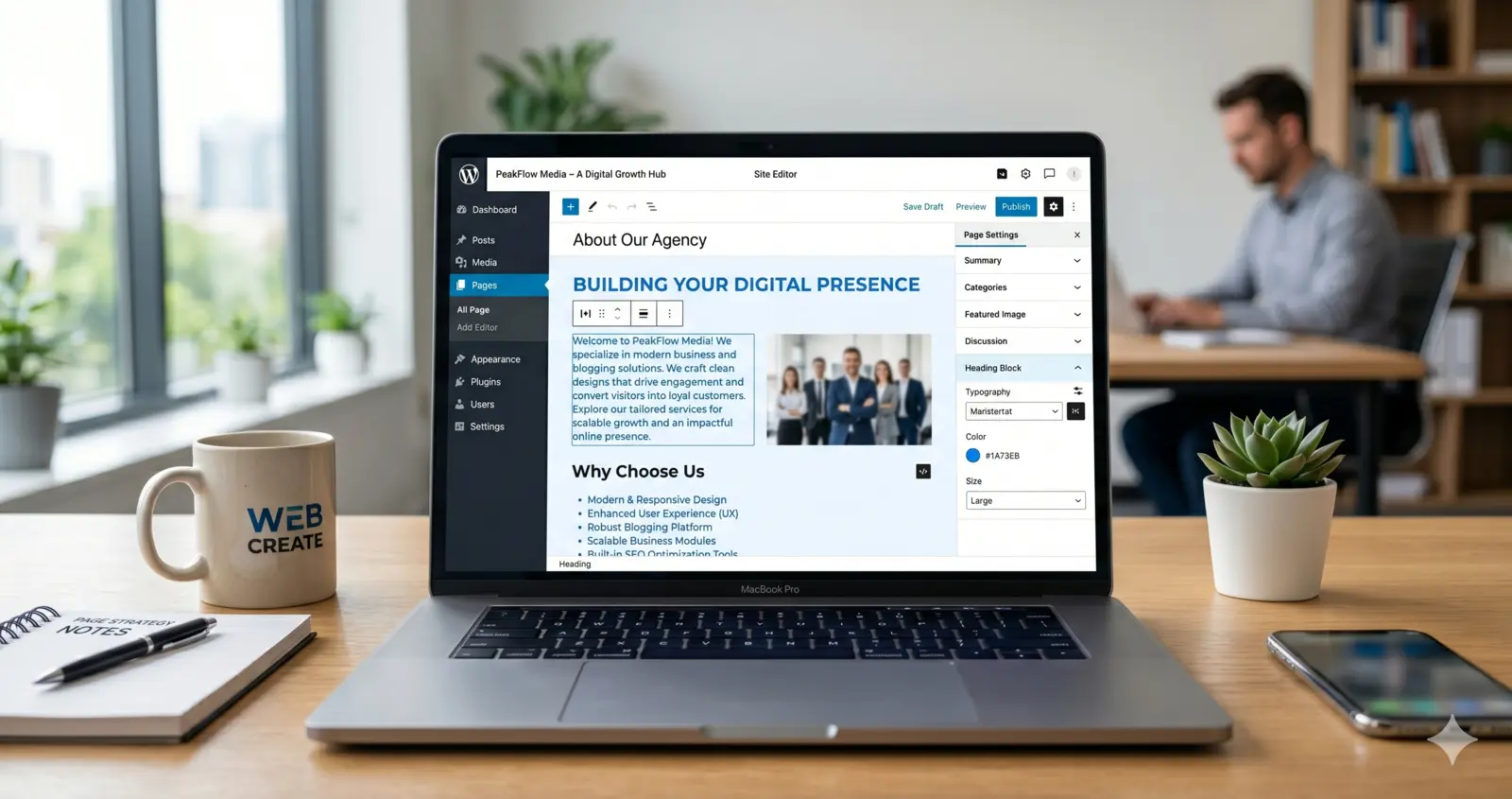
How to Create a WordPress Website?
Creating a website has never been easier than it is today. Whether you want to start a blog, build an online business, create a portfolio, or launch an ecommerce store, WordPress remains one of the most powerful platforms available. Millions of website owners continue to choose WordPress because it offers flexibility, ownership, and virtually unlimited growth potential.
Many beginners assume that building a website requires coding knowledge or hiring a developer. That may have been true years ago, but modern WordPress tools allow almost anyone to create a professional website with drag-and-drop builders, ready-made themes, and powerful plugins. In many cases, you can launch a fully functional website within a single day.
This guide explains everything you need to know about creating a WordPress website in 2026. You’ll learn how WordPress works, how to choose hosting, how to install themes and plugins, and how to optimize your site for traffic, speed, and future growth.
What Is WordPress and Why Is It Used? — How to Create a WordPress Website?
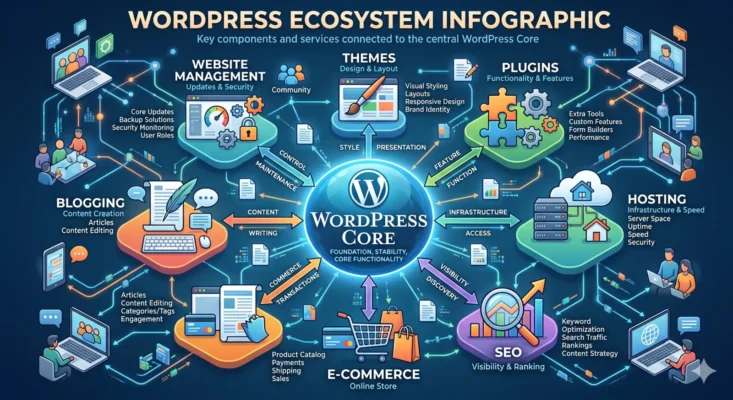
WordPress is a content management system (CMS) that allows users to create and manage websites without writing code. It started as a blogging platform but has evolved into a complete website-building ecosystem capable of powering everything from personal blogs to large ecommerce stores and enterprise websites.
One of the biggest reasons WordPress became so popular is flexibility. Unlike many website builders that lock users into a limited environment, WordPress gives you full control over your website’s design, functionality, and monetization options. You can start with a simple blog and later transform it into a membership site, online store, or digital business without rebuilding from scratch.
Businesses, bloggers, freelancers, agencies, and ecommerce brands use WordPress because it scales exceptionally well. Whether you’re publishing ten articles per month or managing thousands of pages, WordPress can grow alongside your business.
Can WordPress Be Used to Create a Website? — How to Create a WordPress Website?
Yes, WordPress can be used to create almost any type of website imaginable. Many people mistakenly think WordPress is only for blogging, but modern WordPress supports business websites, online stores, portfolios, news websites, educational platforms, membership communities, and more.
The reason WordPress is so versatile comes down to themes and plugins. Themes control the appearance of your website, while plugins add new functionality. By combining these two elements, you can create highly customized websites without touching a single line of code.
For beginners, this flexibility is a major advantage. You can start small, learn gradually, and expand your website as your goals evolve.
How Does WordPress Work Step by Step?
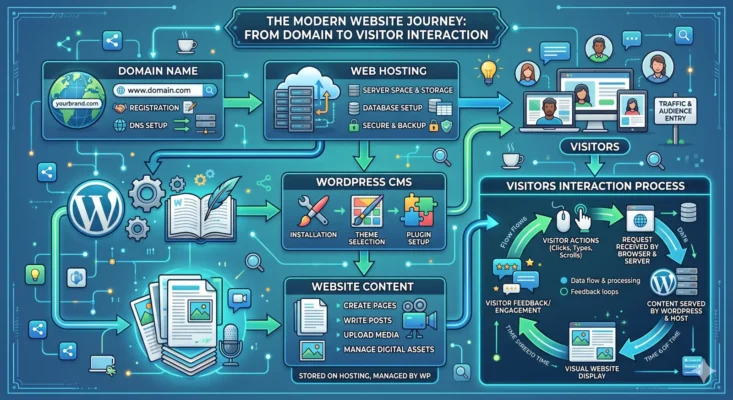
At its core, WordPress sits between your website content and your visitors. When someone visits your website, WordPress retrieves information from its database, combines it with your chosen theme, and displays the final page in the visitor’s browser.
The process sounds technical, but most users never need to interact with the underlying system directly. Instead, WordPress provides a dashboard where you can publish articles, create pages, upload images, install plugins, and customize your website.
Think of WordPress as the operating system of your website. Just as Windows powers your computer, WordPress powers your website and manages everything behind the scenes.
Can WordPress Host My Website?
This is one of the most common questions beginners ask. The answer depends on which version of WordPress you’re using. WordPress itself is software, but you still need hosting to make your website accessible on the internet.
Many website owners choose managed WordPress hosting because it simplifies updates, security, backups, and performance optimization. For beginners, this often reduces technical headaches and allows more time to focus on content creation and business growth.
When selecting hosting, prioritize reliability, speed, security, and customer support rather than simply choosing the cheapest option available. A good hosting provider can significantly improve website performance and user experience.

If you're looking for an easy way to launch a website without managing server configurations, backups, and security updates manually, a managed WordPress hosting solution can save significant time.

For beginners who want an easy setup process, managed WordPress hosting can simplify updates, backups, and security.
Step 1: Choose a Domain Name
Your domain name is the address people type into their browser to find your website. It becomes part of your brand identity, so choosing the right domain is an important decision. Ideally, your domain should be easy to remember, easy to spell, and relevant to your niche.
Avoid using unnecessary numbers, symbols, or complex words that people might struggle to remember. Short and brandable domains tend to perform better over the long term because they’re easier to share and recognize.
If your preferred domain is unavailable, consider slight variations that maintain clarity without sacrificing professionalism. Remember that your domain may stay with your business for years, so it’s worth spending time choosing carefully.
Step 2: Choose the Best Hosting Provider
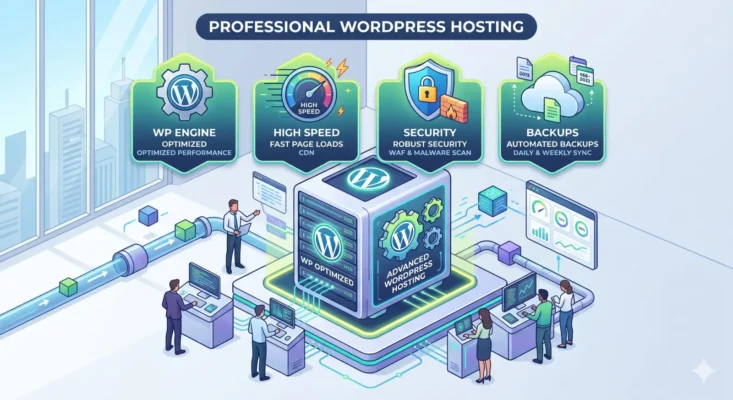
Hosting is the foundation of every website. Even the best-designed website will struggle if it’s hosted on slow or unreliable servers. This is why choosing a quality hosting provider is one of the most important decisions you’ll make.
The best hosting providers optimized for WordPress typically include features such as automatic updates, daily backups, advanced security monitoring, caching technology, and expert support. These features not only improve website performance but also help prevent common technical problems.
As your website grows, hosting quality becomes even more important. Faster loading times improve user experience, increase search visibility, and often contribute to higher conversion rates.
Step 3: Install WordPress
Most modern hosting providers offer one-click WordPress installation. Instead of manually uploading files and configuring databases, you can usually install WordPress with just a few clicks from your hosting dashboard.
Once installed, you’ll receive access to the WordPress admin area. This dashboard acts as your control center and allows you to manage every aspect of your website. Initially, the interface may seem overwhelming, but most users become comfortable with it after a few days of use.
The best approach is to focus on learning the essentials first. You don’t need to master every feature immediately to build a successful website.
Step 4: Choose a WordPress Theme
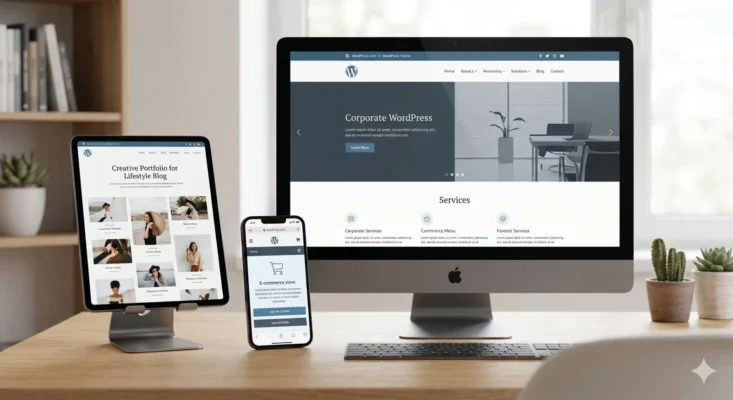
A WordPress theme controls the visual appearance of your website. Themes determine how pages look, how content is displayed, and how visitors interact with your site. Choosing the right theme can dramatically improve both user experience and search performance.
Many beginners focus solely on appearance when selecting a theme. While design matters, performance, responsiveness, and usability are equally important. A beautiful theme that loads slowly can negatively impact both rankings and conversions.
For most website owners, a lightweight, responsive theme provides the best balance between aesthetics and performance. Modern themes are highly customizable and can often be adapted to fit different industries and business models.
Are WordPress Themes Free?
Yes, many WordPress themes are completely free. The official WordPress theme directory contains thousands of free themes suitable for blogs, business websites, portfolios, and ecommerce stores.
However, premium themes often provide additional customization options, advanced support, and more sophisticated design features. For businesses planning long-term growth, investing in a quality premium theme can be worthwhile.
The decision ultimately depends on your goals. Many successful websites operate using free themes, while others benefit from the flexibility offered by premium alternatives.
Which WordPress Theme Is Best for Blogging?
The best blogging theme is one that prioritizes readability, speed, and user experience. Visitors come to blogs primarily for content, so the design should support rather than distract from the reading experience.
Look for themes that offer clean typography, mobile responsiveness, fast loading times, and customization flexibility. These factors contribute not only to user satisfaction but also to search engine performance.
A well-designed blogging theme helps create trust with readers and encourages them to spend more time exploring your content.
What Are WordPress Plugins and Why Are They Important?
If themes control how your website looks, plugins control what your website can do. A plugin is essentially an add-on that extends WordPress functionality without requiring coding knowledge. Whether you want to improve SEO, create contact forms, speed up your site, or secure your website, there’s usually a plugin available to help.
One reason WordPress remains so popular is its massive plugin ecosystem. Thousands of developers actively create plugins that solve specific problems for website owners. This allows beginners to build highly functional websites without hiring developers or writing custom code.
For example, if you want to collect email subscribers, you can install an email marketing plugin. If you want to improve search engine visibility, you can install an SEO plugin. If you want to create an online store, WooCommerce can transform your website into a fully featured ecommerce platform.
The flexibility plugins provide is one of the biggest reasons businesses continue choosing WordPress over many closed website builders.
Are WordPress Plugins Free?
Many WordPress plugins are available for free and provide enough functionality for most beginners. The official WordPress plugin repository contains thousands of free plugins covering SEO, security, performance, ecommerce, backups, forms, and much more.
However, premium plugins often include advanced features, dedicated support, and regular updates. As your website grows, you may discover that paid plugins help automate tasks, improve efficiency, and unlock additional functionality.
The good news is that you don’t need to spend money immediately. Most successful websites begin with a combination of free plugins and gradually upgrade when specific business needs arise.
The key is focusing on quality rather than quantity. Installing too many plugins can create maintenance challenges and potentially impact performance.
Which WordPress Plugins Are Essential for a New Website?
One of the most common mistakes beginners make is installing dozens of plugins immediately after launching their website. While plugins are powerful, every plugin adds complexity and should serve a clear purpose.
Most new websites only need a handful of essential plugins to get started. These typically include an SEO plugin, a security plugin, a backup solution, a caching plugin, and a contact form plugin. Together, these tools provide a strong foundation for growth.
As your website evolves, you can add specialized plugins based on your goals. Ecommerce stores, membership websites, and course platforms often require additional functionality that general blogs may never need.
Keeping your plugin stack lean improves performance, reduces security risks, and simplifies website management.
Where Can You Find Premium WordPress Plugins for SEO?
SEO remains one of the most valuable traffic sources for website owners. Organic search visitors often arrive with strong intent, making them more likely to engage with content, join email lists, or make purchases.
Premium SEO plugins typically provide advanced features such as schema markup, keyword optimization tools, redirect management, internal linking suggestions, and AI-assisted content analysis. These features can help improve content visibility and streamline optimization efforts.
While free SEO plugins are often sufficient for beginners, growing websites frequently benefit from advanced capabilities offered by premium solutions. The additional features can save time and help identify opportunities that might otherwise be overlooked.
Before purchasing any SEO plugin, evaluate its reputation, update frequency, support quality, and compatibility with your existing setup.
How Do You Create a Professional-Looking Website Without Coding Experience?
Modern WordPress makes it possible for virtually anyone to build a professional website without touching code. Drag-and-drop builders, visual editors, customizable themes, and pre-built templates have dramatically reduced the technical barriers that once existed.
Instead of designing every page from scratch, many website owners begin with professionally designed templates. These templates provide a polished foundation that can be customized to match specific branding requirements and business goals.
The most successful beginner websites focus on clarity rather than complexity. Clean layouts, readable typography, logical navigation, and fast loading speeds often outperform overly complicated designs filled with unnecessary visual elements.
Visitors care more about finding information quickly than being impressed by flashy animations or complicated layouts.
What Are the Essential Plugins for Improving Website Security?
Security should never be treated as an afterthought. As soon as a website becomes publicly accessible, automated bots begin scanning it for vulnerabilities. This happens regardless of whether the website receives significant traffic.
Security plugins help protect websites by monitoring suspicious activity, limiting login attempts, scanning for malware, and blocking malicious traffic. While no security solution is perfect, these tools significantly reduce risk when combined with good website maintenance practices.
Strong passwords, regular updates, secure hosting, and routine backups remain equally important. Security plugins should be viewed as part of a broader security strategy rather than a complete solution.
Website owners who prioritize security early often avoid costly problems later.
Are WordPress Websites Secure?
A common misconception is that WordPress itself is insecure. In reality, WordPress powers millions of websites worldwide, including major businesses, educational institutions, media organizations, and government entities.
Most security incidents occur because websites use outdated plugins, weak passwords, unsupported themes, or poorly maintained hosting environments. In many cases, the platform itself is not the root cause of the problem.
When properly maintained, WordPress can be extremely secure. Regular updates, reputable plugins, quality hosting, and basic security practices dramatically reduce vulnerability exposure.
Security is ultimately a shared responsibility between the website owner, hosting provider, theme developers, and plugin developers.
Why Do WordPress Sites Get Hacked?
Most hacked WordPress websites share similar patterns. Outdated software, abandoned plugins, weak administrator credentials, and poor hosting environments are among the most common causes.
Hackers often rely on automated tools that scan thousands of websites looking for known vulnerabilities. Websites that fail to update software regularly become attractive targets because attackers can exploit publicly documented weaknesses.
Another common issue is plugin overload. Every plugin introduces additional code, and poorly maintained plugins can create security risks. This is why quality and maintenance history matter when selecting plugins.
A proactive security strategy significantly reduces the likelihood of experiencing a successful attack.
How Can You Optimize a WordPress Website for Faster Loading Speeds?
Website speed directly affects user experience, search visibility, and conversion rates. Visitors expect websites to load quickly, and delays often result in higher bounce rates and lost opportunities.
Several factors influence website speed, including hosting quality, image optimization, caching, plugin usage, theme performance, and server configuration. Improving just one area may provide limited benefits, but optimizing multiple areas together can produce dramatic improvements.
Image optimization is often one of the easiest performance wins. Large image files frequently account for a significant percentage of page weight, making them a common source of slow loading times.
Investing in quality hosting and performance optimization usually delivers long-term benefits that outweigh the initial cost.
Why Is My WordPress Website Slow?
Many website owners blame WordPress itself when performance issues occur. In reality, slow websites are usually caused by poor hosting, excessive plugins, oversized images, bloated themes, or inefficient configurations.
A common example is installing dozens of plugins that perform overlapping tasks. Each plugin adds code that must be processed, potentially increasing page load times and resource usage.
Poorly optimized images are another frequent culprit. Uploading high-resolution images directly from smartphones or cameras without compression can significantly impact website performance.
Identifying bottlenecks through performance testing tools is often the fastest way to uncover the real cause of speed issues.
Can WordPress Handle Heavy Traffic?
Yes, WordPress can handle significant traffic volumes when properly optimized. Many high-traffic websites receive millions of visitors each month while running on WordPress.
Scalability depends largely on hosting infrastructure, caching systems, content delivery networks, database optimization, and server resources. The platform itself is capable of supporting substantial growth.
As traffic increases, website owners typically upgrade hosting resources and implement more advanced performance optimization techniques. This gradual scaling process allows websites to maintain stability during periods of rapid growth.
For most beginners, traffic limitations are unlikely to become a concern for quite some time.
What Is WooCommerce and Why Do So Many Store Owners Use It?
WooCommerce is the most popular ecommerce solution built specifically for WordPress. It transforms a standard website into a fully functional online store capable of selling physical products, digital downloads, subscriptions, memberships, and services.
One reason WooCommerce remains so popular is flexibility. Store owners retain complete ownership of their platform, customer data, and customization options. Unlike many hosted ecommerce solutions, WooCommerce gives businesses greater control over their long-term growth.
Whether you’re selling handmade products, software, courses, or consulting services, WooCommerce provides a scalable framework that can adapt to changing business needs.
This flexibility makes it a natural choice for entrepreneurs who want full control over their online stores.
WordPress vs Wix: Which Platform Is Better in 2026?
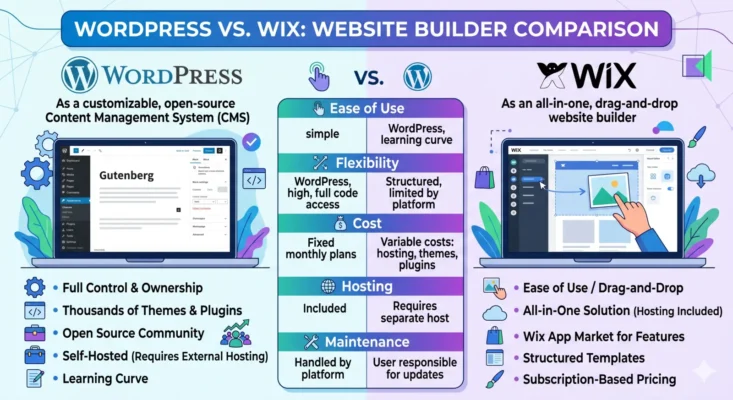
One of the most common questions new website owners ask is whether they should choose WordPress or Wix. Both platforms allow users to create websites without advanced coding skills, but they approach website building very differently. The right choice depends on your goals, budget, and long-term plans.
Wix focuses on simplicity and convenience. It provides an all-in-one platform where hosting, design tools, and website management are handled from a single dashboard. This makes it attractive for beginners who want to launch a simple website quickly.
WordPress, on the other hand, focuses on flexibility and ownership. You have greater control over your website, access to thousands of plugins and themes, and significantly more customization options. For anyone planning to grow a content website, business site, or ecommerce store, these advantages become increasingly important over time.
While Wix can be an excellent solution for small projects, WordPress generally offers more room for expansion. Many website owners who start with Wix eventually migrate to WordPress once they outgrow the platform’s limitations.
Why Is WordPress Better Than Wix for SEO?
Search engine optimization is one area where WordPress has traditionally maintained an advantage. Because WordPress gives users more control over technical SEO settings, it allows for deeper optimization as websites grow. This flexibility becomes valuable when competing in competitive search results.
WordPress supports advanced SEO plugins, custom schema markup, redirect management, internal linking strategies, and detailed content optimization workflows. These features help website owners implement sophisticated SEO strategies without needing custom development.
Wix has improved significantly in recent years and supports many important SEO features. However, WordPress still provides more flexibility for businesses that rely heavily on organic search traffic. This is one reason why many affiliate marketers, bloggers, and publishers continue to prefer WordPress.
For long-term content marketing and search engine growth, WordPress remains one of the strongest platforms available.
Which Is Cheaper: WordPress or Wix?
The answer depends on how you build your website and what features you need. Wix bundles many services into a single subscription, which can simplify budgeting for beginners. You generally know exactly what you’ll pay each month.
WordPress offers greater flexibility in pricing because you choose your own hosting, themes, plugins, and additional services. This means you can start with a relatively small budget and scale expenses as your website grows.
For many beginners, WordPress can be very affordable initially. However, growing websites often invest in premium themes, plugins, advanced hosting, and marketing tools. These investments usually provide additional functionality and business benefits.
Instead of focusing solely on cost, website owners should consider long-term value and growth potential when comparing platforms.
Is WordPress Used Anymore?
Despite frequent claims that WordPress is becoming outdated, it remains one of the most widely used website platforms in the world. Millions of businesses, bloggers, publishers, educational institutions, and ecommerce brands continue to rely on WordPress every day.
The platform’s popularity is driven by its flexibility and large ecosystem. Thousands of developers actively create themes, plugins, integrations, and tools that help WordPress evolve alongside changing technology trends.
Because WordPress is open source, it benefits from contributions from a large global community. This ongoing development ensures the platform continues adapting to modern web standards, performance requirements, and user expectations.
Rather than declining, WordPress continues to evolve and maintain a significant presence across the internet.
Is WordPress Losing Popularity?
This question appears frequently in search results because website builders and AI-powered platforms receive significant attention. While competition has increased, WordPress remains one of the dominant website-building platforms globally.
New website builders often focus on simplicity and convenience. These tools can be excellent for specific use cases, but many businesses eventually require greater flexibility, ownership, and scalability. This is where WordPress continues to perform exceptionally well.
The growing popularity of AI tools has also created new opportunities for WordPress users. Content creation, design assistance, customer support, and workflow automation can now be integrated into WordPress websites more easily than ever.
Instead of losing relevance, WordPress is adapting to new technologies while maintaining its core strengths.
Is WordPress Outdated in 2026?
No, WordPress is not outdated in 2026. In fact, many modern web technologies are actively being integrated into the WordPress ecosystem. Features such as AI-assisted content creation, advanced site editing, improved performance optimization, and enhanced security continue to strengthen the platform.
People sometimes associate WordPress with older websites because it has existed for many years. However, longevity should not be confused with obsolescence. Many of the world’s most successful software platforms have evolved continuously over decades.
Modern WordPress websites can be incredibly fast, visually appealing, mobile-friendly, and feature-rich. The platform’s flexibility allows businesses to adopt new technologies without rebuilding their entire digital presence.
For most website owners, WordPress remains one of the most future-proof website platforms available today.
Can WordPress Websites Be Monetized?
Yes, WordPress websites can be monetized in numerous ways. In fact, one of WordPress’s biggest strengths is the freedom it provides website owners to generate revenue using different business models.
Many bloggers earn income through affiliate marketing by recommending products and services relevant to their audience. Others generate revenue through display advertising, sponsored content, memberships, online courses, consulting services, or digital product sales.
Unlike some website builders that restrict monetization options, WordPress gives users full control over how they earn money. This flexibility makes it especially attractive for entrepreneurs and content creators.
As traffic grows, website owners often combine multiple revenue streams to create a more stable and profitable business.
How Do Bloggers Make Money With WordPress?
Affiliate marketing is often the first monetization method beginners explore. By recommending useful products and services, bloggers can earn commissions when readers make purchases through their referral links. This model works particularly well when recommendations genuinely help the audience.
Display advertising becomes more effective as website traffic increases. Advertising networks place ads on your website and pay based on impressions, clicks, or user engagement. While ad revenue may start small, it can become substantial as traffic grows.
Many successful bloggers also create their own products. Digital downloads, templates, courses, coaching programs, memberships, and premium resources often provide higher profit margins than advertising alone.
The most profitable websites typically diversify their revenue streams rather than relying entirely on a single source of income.
Which WordPress Plan Is Best for Blogging?

The ideal plan depends on your goals and budget. Beginners often start with a basic setup that allows them to publish content, learn the platform, and build initial traffic. This approach minimizes risk while providing valuable experience.
As traffic and revenue increase, many bloggers upgrade to plans that support advanced customization, premium plugins, enhanced performance, and additional business features. These upgrades often become worthwhile investments once the website begins generating income.
When evaluating plans, focus on long-term needs rather than immediate requirements. Choosing a solution that supports future growth can prevent unnecessary migrations and technical complications later.
A blogging platform should support your ambitions rather than limit them.
New bloggers typically benefit from a plan that includes hosting, security, backups, and plugin support from day one at wordpress.
Can AI Replace WordPress Developers?
Artificial intelligence is transforming website creation, but it is unlikely to eliminate the need for WordPress developers entirely. AI tools excel at automating repetitive tasks, generating content drafts, assisting with design decisions, and improving productivity.
However, businesses still require strategic thinking, technical expertise, custom development, troubleshooting, performance optimization, and complex integrations. These areas often benefit from human experience and problem-solving abilities.
Rather than replacing developers, AI is changing how developers work. Many professionals now use AI tools to accelerate workflows and focus more attention on higher-value activities.
For website owners, this trend often leads to faster development cycles and improved efficiency.
Frequently Asked Questions About WordPress
What Is the Main Purpose of WordPress?
The primary purpose of WordPress is to help people create, manage, and publish websites without requiring extensive technical expertise. It provides tools for content management, design customization, and website functionality within a flexible platform.
Who Uses WordPress?
WordPress is used by bloggers, small businesses, ecommerce stores, educational organizations, news publishers, nonprofits, freelancers, agencies, and large enterprises. Its flexibility allows it to serve a wide range of industries and use cases.
Why Do Some People Avoid WordPress?
Some users prefer simpler website builders because they require less maintenance. WordPress offers more flexibility, but that flexibility also comes with greater responsibility for updates, security, and ongoing management.
What Is Replacing WordPress?
Currently, no single platform is replacing WordPress. Alternatives such as Wix, Squarespace, Webflow, Shopify, and AI website builders serve different audiences, but WordPress continues to maintain a strong position due to its flexibility and ownership advantages.
Will WordPress Die?
There is no evidence suggesting WordPress is disappearing. Its large user base, active development community, extensive ecosystem, and widespread adoption continue to support its long-term relevance.
Final Thoughts
Creating a WordPress website in 2026 is easier than ever before. Modern themes, plugins, hosting solutions, and visual builders allow beginners to launch professional websites without coding experience. What once required a developer can now often be accomplished through intuitive tools and guided workflows.
The real challenge is no longer building a website. The challenge is creating valuable content, serving your audience, and consistently improving your website over time. Those who focus on solving real problems and providing useful information are often rewarded with growing traffic, stronger authority, and better business opportunities.
Whether your goal is blogging, affiliate marketing, ecommerce, consulting, or building an online brand, WordPress provides a flexible foundation that can grow alongside your ambitions. With the right strategy, your website can become a long-term digital asset that generates traffic, leads, and revenue for years to come.
If you’re starting your first website, managed WordPress hosting can save time by handling updates, backups, security, and performance optimization for you. Learn more here.
📘 Want the Full System in One Place?
If you'd rather have a complete step-by-step plan in your hands — including a 30-day content calendar, email sequence templates, and the exact keyword strategy behind this blog — I wrote it all out in the 📘 Book available on Amazon. It's the system behind everything you're reading here.
📘 30-Day Affiliate Marketing Roadmap Edition 1 → Check it out on Amazon.
📘 Affiliate Marketing SEO Roadmap Edition 2 → Check it out on Amazon.
TheReviewLabs Team
Active ClickBank Affiliates · Affiliate Marketing Researchers
We are active ClickBank affiliates who research and test affiliate offers using ClickBank's official marketplace data, Top Offers reports, and real commission performance. All Gravity scores, EPC figures, and payout data in this article are sourced directly from ClickBank's platform as of April 2026. We update this list every two weeks. Learn more about our review process →