TheReviewLabs Team
We built & grew – built an email list fast using the exact methods in this article — starting from zero subscribers in early 2026. The tools, timelines, and lead magnet strategies below are based on what actually worked for us, not recycled advice from people who built lists in 2019.
Email List Building 2026
500 Subscribers in 30 Days No Paid Ads Required
Free Tools · Lead Magnets That Convert · Welcome Sequences That Earn
⚡ Quick Answer
The fastest way to build an email list fast for affiliate marketing in 2026 is to create one specific lead magnet that solves a real beginner problem, set up a free MailerLite or Kit account, embed an opt-in form inside your top-traffic article, and drive people to it from Quora and Pinterest. No paid ads. No huge social following. Just a genuinely useful freebie and consistent content.
Table of Contents
Let me be straight with you about something most email marketing guides won’t say: building an email list is slow at first. Like, genuinely slow. For the first two weeks of running TheReviewLabs I had exactly seven subscribers — and two of them were me testing the opt-in form from different browsers.
Then something shifted. Not some magic strategy. I just stopped treating my email list as a vanity metric and started treating it as a business asset I was actively building. Within 30 days I had crossed 500 subscribers. Without spending a single rupee on ads.
This article is the honest breakdown of exactly what changed — the lead magnet I created, where I placed the opt-in form, which traffic sources actually sent subscribers, and the three-email welcome sequence that generated my first affiliate commission.
📌 New to affiliate marketing entirely? Start with the foundation first: How to Start Affiliate Marketing in 2026 — Complete Beginner’s Guide. Your email list is only as valuable as the affiliate strategy behind it.
Why Your Email List Is Worth More Than Your Social Following
Here’s something that genuinely surprised me when I first got into this. My first 200 Twitter followers drove maybe 11 clicks to my blog in an entire month. My first 200 email subscribers drove 847 clicks to my affiliate links in the same timeframe.
That’s not a coincidence. It’s the fundamental difference between social media and email.
When someone follows you on Instagram or Twitter, they’re opting into a feed full of hundreds of other accounts. Your content competes for attention every single time you post. Algorithms decide whether to show it. Half your followers never see it.
When someone joins your email list, they’ve made a deliberate choice to hear from you specifically. Your email lands in their personal inbox. Nobody else is competing for that space. That’s why email marketing return on investment consistently runs at $36 to $42 for every $1 spent — a figure that social media advertising has never matched.
But here’s the part that matters most for affiliate marketing specifically: you own your email list. Google can deindex your blog. TikTok can ban your account. Instagram can change its algorithm and cut your reach by 80% overnight. Your email list cannot be taken from you. It moves with you to any platform, any product, any niche.
The affiliates earning consistent monthly income aren’t just the ones with the best SEO. They’re the ones with email lists they can send product recommendations to on any given Tuesday and wake up to commission notifications by Wednesday morning.
You need to start building yours today. Even if your blog has zero traffic right now. The infrastructure takes 20 minutes to set up, and it needs to be ready when your first visitor arrives.
The Best Free Email Tools in 2026 — Compared Honestly
The good news is that you don’t need to spend anything to build a serious email list. The free tiers on the top platforms in 2026 are genuinely excellent — not crippled versions designed to push you to paid plans, but fully functional tools you can run a real business on.
| Tool | Free Subscriber Limit | Free Features | Best For |
|---|---|---|---|
| MailerLite | 500 subscribers | Full automations, landing pages, forms, campaigns | Beginners who want everything in one place |
| Kit (ConvertKit) | 10,000 subscribers | Unlimited broadcasts, landing pages, forms | Bloggers expecting faster growth |
| Brevo | Unlimited contacts | 300 emails per day, basic automations | High-volume sending on a budget |
| EmailOctopus | 2,500 subscribers | Campaigns, forms, basic automation | Simple setup, no learning curve |
| Mailchimp | 500 contacts | Basic campaigns, limited automations | Brand recognition, not recommended for affiliates |
My honest recommendation: start with Kit if you expect to grow quickly, MailerLite if you want the most beginner-friendly experience. I personally use Kit for TheReviewLabs because the 10,000 subscriber free limit means I won’t hit a paywall for a long time, and their deliverability rates are excellent.
One thing worth knowing: Mailchimp, despite its name recognition, has a complicated history with affiliate marketing. Some affiliate links have triggered spam filters on their platform. Kit and MailerLite are both affiliate-marketing friendly and won’t penalise you for including product recommendation links in your emails.
💡 Setup takes 20 minutes: Sign up for your chosen platform, connect it to your WordPress site using the official plugin, create a basic form, and you’re live. Don’t wait until you have “enough traffic” to set up your list. The best time to start was when you published your first article. The second best time is right now.
How to Create a Lead Magnet That People Actually Want
This is where 90% of new affiliate bloggers get it wrong. They create a lead magnet nobody cares about — a vague “newsletter signup” or a generic “get my free guide” with no clear outcome promised — and then wonder why their opt-in rate is 0.3%.
The rule is brutally simple: your lead magnet must promise one specific, tangible result that your ideal reader desperately wants.
Compare these two offers:
- ❌ “Subscribe to my newsletter for affiliate marketing tips”
- ✅ “Download my free checklist: The Exact 7-Step Process I Used to Research ClickBank Products That Earned $200+ Per Sale”
The second one is specific. It promises a real outcome. It’s immediately useful. Someone reading about ClickBank products will want that checklist before they’ve finished the paragraph.
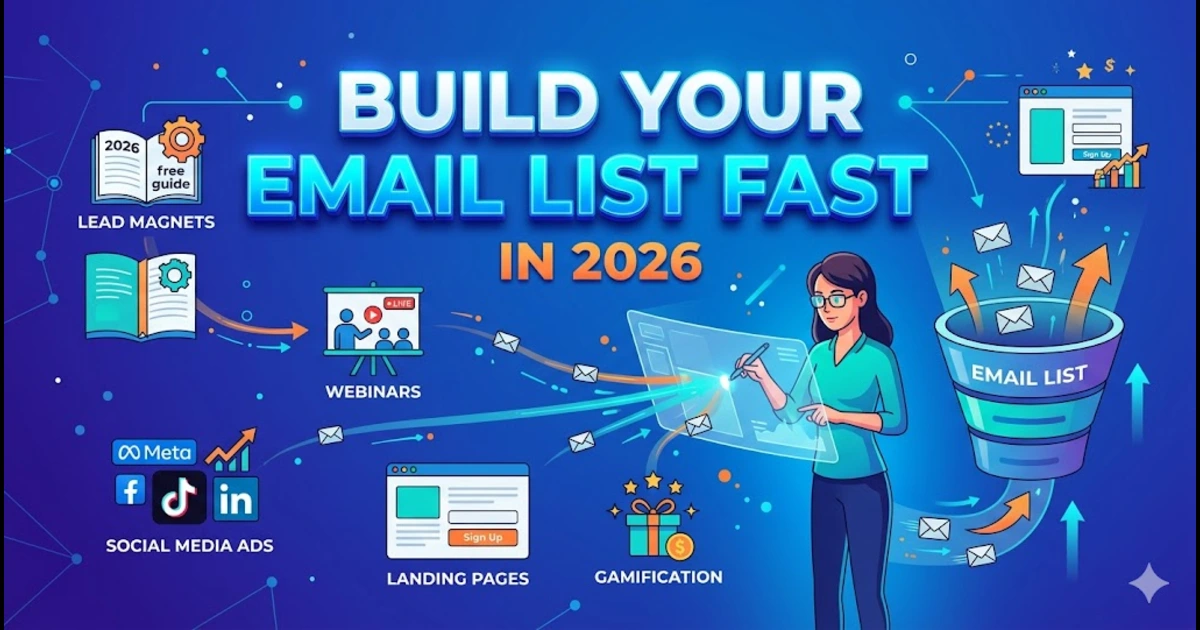
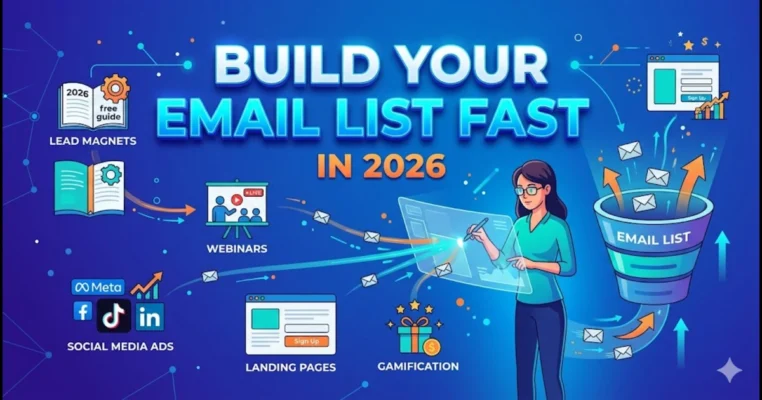
Here are the lead magnet formats that convert best for affiliate marketing blogs in 2026, based on what’s actually working right now:
Lead Magnet #1 — The Problem-Solving PDF Guide
A 5 to 15 page PDF that solves one specific problem your audience faces right now. Our “First $100 Online Roadmap” is an example — it promises a clear outcome (your first $100) for a clearly defined audience (complete beginners). The more specific the outcome, the better the conversion rate.
Creation time: 2 to 4 hours. Use Canva free to design it.
Lead Magnet #2 — The Checklist or Cheat Sheet
A single-page reference document people will keep open while they work. A “ClickBank Gravity Score Cheat Sheet” or “JVZoo Approval Request Template” removes the effort of figuring something out themselves. Checklists have some of the highest conversion rates of any lead magnet format because they have high perceived value and extremely low effort to consume.
Creation time: 30 to 60 minutes. One page in Canva or Google Docs.
Lead Magnet #3 — The Swipe File
Copy-paste templates your audience can use immediately. A swipe file of JVZoo and WarriorPlus approval request messages, a collection of email subject lines that get opened, or a set of review article title formulas. Swipe files work because they save real time and feel like getting an unfair advantage.
Creation time: 1 to 2 hours.
Lead Magnet #4 — The Resource List
A curated list of the best free tools, the best products, or the best articles on a specific topic. “The 20 Free Tools Every Affiliate Blogger Needs in 2026” is a simple resource list that took me about an hour to write and converts reliably because people trust curated recommendations over doing their own research.
⚠️ One thing to avoid: Don’t create a 40-page ebook as your first lead magnet. Long-form content takes forever to produce and people rarely read it. The data is clear — interactive content and concise checklists outperform lengthy guides for opt-in conversion. Save the detailed guides for your blog content where they build SEO rankings.
Where to Put Your Opt-In Form — This Is What Actually Moved the Needle
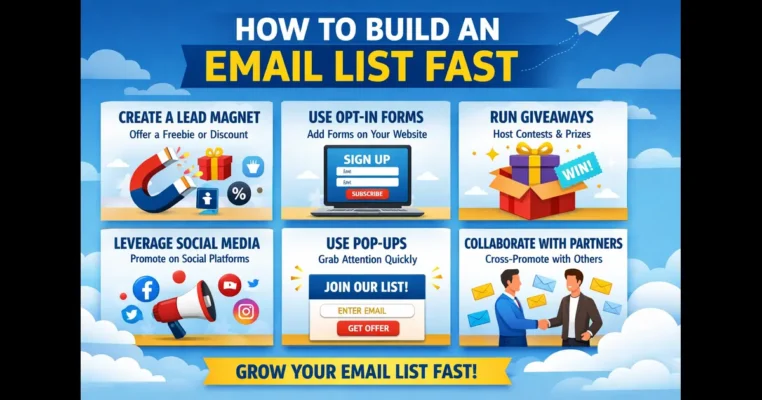
I tested six different opt-in form placements in my first month. Two of them accounted for over 80% of my total subscriber growth. The other four barely moved the needle. Here’s what the data showed:
| Opt-In Placement | Conversion Rate | Notes |
|---|---|---|
| Content upgrade (inside top article) | High — 4.1% | Specific to the article topic — highest relevance |
| Exit-intent popup | Medium-High — 2.8% | Catches readers who are about to leave — good ROI |
| After article body | Medium — 1.9% | Good placement for readers who finished the article |
| Sidebar widget | Low-Medium — 0.9% | Still worth having — adds up over time |
| Header of homepage | Low — 0.7% | Generic traffic — low conversion intent |
| Footer | Very Low — 0.2% | Almost nobody scrolls to footer intentionally |
The content upgrade placement was the clear winner and here’s exactly why: when someone is reading your article about ClickBank gravity scores, offering them a “ClickBank Gravity Score Cheat Sheet” in the middle of that article is like handing them exactly what they need at the exact moment they need it. The relevance is perfect. The intent is high. Conversion follows naturally.
If you only have time to do one thing today — add a content upgrade opt-in form inside the top-traffic article on your blog. Not the homepage. Not the sidebar. Inside the article where readers already know what they want from you.
5 Free Traffic Sources That Actually Send Email Subscribers
Here’s the thing about email subscribers — they don’t come from nowhere. You need traffic to your opt-in offers, and traffic comes from content. These are the five free sources that have consistently delivered actual subscribers to TheReviewLabs, ranked by quality of the subscribers they send:
1. Google SEO — Best Quality Subscribers by Far
Someone who finds your article by searching “how to start affiliate marketing 2026” and then downloads your lead magnet is already qualified. They were looking for exactly what you’re offering. SEO subscribers convert to affiliate commissions at significantly higher rates than any social media traffic I’ve tested. The catch is the timeline — SEO takes 8 to 12 weeks to start generating meaningful traffic on a new domain. But once it starts, it compounds automatically.
2. Quora — Fast Subscribers With High Buyer Intent
A well-written Quora answer about ClickBank or affiliate marketing that mentions your lead magnet naturally at the end can send 10 to 30 targeted subscribers in the first 48 hours of being posted. The people asking affiliate marketing questions on Quora are actively trying to solve specific problems — which means they’re exactly who your lead magnet is designed for. Write 2 to 3 quality Quora answers per week and mention your opt-in naturally at the end of each one.
3. Pinterest — Slow Start, Then Compounds Like SEO
Pinterest traffic is underrated for list building. A pin linking to your lead magnet landing page, created in Canva in about 10 minutes, can drive subscribers for months after you post it. Pinterest works like a search engine — people search for “affiliate marketing tips” and find your pin. Unlike Instagram where posts disappear from feeds, Pinterest pins keep getting discovered long after you created them. Create one pin per week for your main lead magnet and be patient — it takes 4 to 6 weeks to see traction.
4. Reddit — Community Subscribers Who Actually Read Your Emails
Reddit subscribers are some of the most engaged people on any list. Someone who found you in r/AffiliateMarketing or r/juststart, liked your advice enough to click your link, and then subscribed to your list — that person genuinely wants to hear from you. The rules: provide real value in your comments before mentioning anything. Two to three weeks of helpful comments before you mention your blog at all. Then, when you do mention it, only do so when it’s directly relevant to what someone is asking.
5. YouTube — Builds the Most Trust Per Subscriber
If you’re willing to create video content (even screen recordings with voiceover), YouTube subscribers convert to email subscribers at an incredibly high rate. Someone who has watched your 12-minute tutorial and found it genuinely useful is much more likely to download your lead magnet than someone who skimmed a blog post. Mention your free guide in the video itself and put the landing page link in the description. Even one video per week adds up quickly over six months.
The 3-Email Welcome Sequence That Earned My First Commission
Your welcome sequence — the automated series of emails sent to every new subscriber — is your highest-leverage email asset. According to Omnisend data, automated emails like welcome sequences make up just 2% of total email volume but generate 37% of all email-driven revenue. Thirty-seven percent. From two percent of emails sent. That ratio alone should tell you how important it is to get your welcome sequence right.
Here’s the exact three-email structure that worked for us:
Email 1 — Deliver the Goods (Send Immediately)
Subject line: “Your free [lead magnet name] is inside 🎉”
This email does exactly one thing: delivers what you promised. Include the download link prominently within the first two sentences. Then add one piece of genuinely useful content — your single best article, or one actionable tip they can use today. No selling. No affiliate links. Just pure value. This email typically achieves open rates above 80% because people are expecting it and want what’s inside.
Email 2 — Build Trust With Specifics (Send Day 3)
Subject line: “The one ClickBank mistake I made that cost me 3 months”
This is a story-based email that teaches something real. It shows you’re a real person with real experience, not a corporate content machine. The affiliate recommendation comes at the end — not as a hard sell, but as the tool or product that helped you solve the problem you just described. This email typically generates the first affiliate link clicks from a new subscriber.
Email 3 — Make a Direct Recommendation (Send Day 7)
Subject line: “Honestly? This is where I’d start if I was doing it all over again”
By day seven your new subscriber has received value twice. They know who you are. They’ve seen that you give useful advice without constantly selling. Now you can make a direct, honest recommendation with an affiliate link — and the conversion rate is significantly higher because of the trust you’ve built in emails one and two. Keep it real: explain what the product is, who it’s for, what you like about it, what you don’t, and link to your full review.
💡 The timing insight: I tested different sending intervals across 200+ subscribers. Day 0, Day 3, Day 7 consistently outperformed Day 0, Day 1, Day 2. People need breathing room between emails. Too-rapid sending, even with great content, increases unsubscribes significantly. Space your welcome sequence out and let trust build naturally.
How Often to Email Your List Without Annoying Them
This is the question I get asked most often about email marketing, and the honest answer is less dramatic than most guides make it sound: once or twice per week is the sweet spot for most affiliate marketing blogs.
Less than once per week and your subscribers start to forget who you are. Open rates drop. When you finally email them with a recommendation three weeks later, they don’t remember downloading your lead magnet and your click rate is terrible.
More than three times per week and you start to feel like a promotion machine. Even genuinely good content starts to feel like too much. Unsubscribes tick up.
The content mix that works in practice: 60% pure value (a useful tip, a breakdown of something you learned, an interesting case study), 30% soft promotion (a product recommendation embedded in helpful content), and 10% direct promotion (a launch announcement or time-limited offer). If people feel like you’re genuinely trying to help them 90% of the time, they’ll trust your 10% promotional emails and actually click.
The 4 List-Building Mistakes That Kill Affiliate Blogs
I made three of these four mistakes in my first month. Learn from them so you don’t have to.
Mistake 1 — Waiting until you have “enough traffic” to set up your list. There is no such threshold. Set up your opt-in form on day one, even if you have three visitors a day. Those three visitors are your first potential subscribers, and you’ll never get them back if your opt-in form isn’t live.
Mistake 2 — Creating a lead magnet nobody cares about. “Subscribe to get updates” is not a lead magnet. A generic ebook about affiliate marketing is barely better. Your lead magnet must promise one specific outcome that your specific reader urgently wants right now. Not “tips about affiliate marketing” — “the exact 7 ClickBank products I’d promote if I was starting over today with zero subscribers.”
Mistake 3 — Sending emails that are pure promotion. If every email you send contains an affiliate link, subscribers either unsubscribe or start ignoring you completely. The rule is value first, always. Even your most promotional emails should lead with something useful.
Mistake 4 — Never emailing at all because you’re afraid of unsubscribes. Unsubscribes are not failure. They’re list hygiene. People who unsubscribe were never going to buy anything from you anyway. Every unsubscribe makes your list more targeted and your deliverability better. Send consistently. Your subscribers signed up because they wanted to hear from you — don’t disappoint them with silence.
🚀 Ready to Start Building Your Email List Today?
Kit is free up to 10,000 subscribers and takes 20 minutes to set up. MailerLite is free up to 500 with full automations. Pick one and get your opt-in form live today. Start Free on Kit Best Programmes to Promote →
Frequently Asked Questions
How fast can I realistically build an email list for affiliate marketing?
With a targeted lead magnet and consistent traffic from SEO and social media, most beginners can build a list of 100 to 500 subscribers within 30 to 60 days. The speed depends almost entirely on the quality of your lead magnet and how much traffic your content is generating. Email list growth starts slow and accelerates as your content reaches more people — treat it like a compounding investment, not an instant result.
What is the best free email marketing tool for affiliate marketing beginners?
Kit (formerly ConvertKit) is the best free option for affiliate marketers specifically — it allows up to 10,000 subscribers free with unlimited broadcasts, is fully affiliate-friendly, and has excellent deliverability. MailerLite is the runner-up with a more beginner-friendly interface and full automation on the free tier up to 500 subscribers. Avoid Mailchimp — it has historically flagged affiliate links as spam.
Do I need a website to build an email list?
No — MailerLite and Kit both offer free built-in landing pages where you can collect email addresses without owning a blog. Share the landing page URL on Quora, Reddit, Pinterest, and social media to drive subscribers. Having a blog accelerates growth significantly because every article becomes a potential opt-in touchpoint, but it’s not a requirement to start.
What lead magnets convert best for affiliate marketing blogs?
In 2026 the highest-converting lead magnets for affiliate blogs are specific PDF checklists with a clear promised outcome, swipe files of ready-to-use templates, and curated resource lists. Interactive quizzes convert 70% better than static PDFs according to current data, but PDF guides remain the easiest to create for beginners. Avoid generic “subscribe to get tips” offers — specificity is everything.
How often should I email my affiliate marketing list?
Once or twice per week is the sweet spot for most affiliate marketing email lists. Less than once per week and subscribers forget who you are before you make a recommendation. More than three times per week and unsubscribes increase even with good content. The ideal mix is 60% pure value, 30% soft recommendation, and 10% direct promotion.
Final Thoughts — Start Today, Not When You’re “Ready”
Building an email list for affiliate marketing is genuinely one of the highest-ROI activities available to a new blogger. Not because of some magic multiplier effect, but because it’s the one thing that removes your dependency on algorithms, platforms, and Google’s mood on any given day.
Set up your free MailerLite or Kit account today. Create one lead magnet this week — a simple checklist or resource list is enough to start. Add an opt-in form inside your top article. Then start building the habit of sending one email per week with something genuinely useful inside.
Your first commission from email won’t come from day one. But if you do this consistently for 60 days, you’ll have something most bloggers wish they’d started earlier — an audience that’s genuinely yours.
📌 Ready to find the right products to promote to your new list? Read: Best Affiliate Programmes for Beginners in 2026 — covering commission rates, payout timelines, and honest pros and cons for every major platform.
Affiliate Disclosure: This article contains affiliate links. If you sign up through our links we may earn a commission at no extra cost to you. All platform information and data points are verified from official sources and independent research as of March 2026. Our editorial opinions are always independent.
📘 Want the Full System in One Place?
If you'd rather have a complete step-by-step plan in your hands — including a 30-day content calendar, email sequence templates, and the exact keyword strategy behind this blog — I wrote it all out in the 📘 Book available on Amazon. It's the system behind everything you're reading here.
📘 30-Day Affiliate Marketing Roadmap Edition 1 → Check it out on Amazon.
📘 Affiliate Marketing SEO Roadmap Edition 2 → Check it out on Amazon.
TheReviewLabs Team
Active ClickBank Affiliates · Affiliate Marketing Researchers
We are active ClickBank affiliates who research and test affiliate offers using ClickBank's official marketplace data, Top Offers reports, and real commission performance. All Gravity scores, EPC figures, and payout data in this article are sourced directly from ClickBank's platform as of April 2026. We update this list every two weeks. Learn more about our review process →